


Advertisement
Rat infestations in Singapore aren't exactly a new problem, but lately, people are noticing them more — and not just in older areas or back alleys, but in places that are supposed to be clean and well-managed. So what's changed?
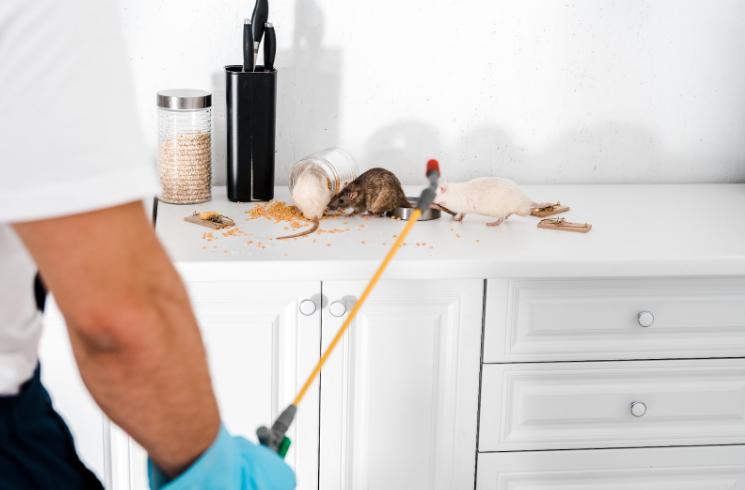
It's really a mix of factors. More construction, more movement of people, more food waste, and small gaps in maintenance that go unnoticed. Rats don't need much to survive, and once they find a spot that works, they settle in quickly. That's why proper rat control in Singapore is no longer something people can delay or ignore.
It's Not Always About Cleanliness
A lot of people still think rats only show up in dirty places. But in reality, even clean environments can have a problem. Sometimes it's just a small opening near a pipe, a bin area that isn't sealed properly, or food waste that sits overnight just once in a while — and that's enough .
Rats are opportunistic. If something works for them, they'll keep coming back. They can breed rapidly — female rats reach reproductive maturity at about 3 months and can have up to 7 litters per year, with 6 to 12 pups each . This is exactly why rodent control has become more of a routine need rather than a one-time fix.
Why the Numbers Are Going Up
There isn't just one reason. It's more like several factors adding up :
Construction work often pushes rodents out of one place into another. They don't disappear — they relocate. Construction sites provide shelter and access to food waste, making them rat havens.
Urban density means more people and more waste. Even when managed properly most of the time, small habits — leaving food out, not sealing gaps, or assuming the problem will go away — create patterns over time.
Food waste remains a major attractant. Poor refuse management is one of the leading causes of rat-related issues, with nearly half of enforcement actions taken in 2024 related to improper waste handling .
Climate and environment — Singapore's tropical climate with high humidity and warm temperatures is favourable for rats. Heavy rainfall can also cause rats to move into human dwellings .
What Proper Control Actually Looks Like
Instead of reacting late, more people are now focusing on prevention. A practical approach usually involves :
Inspection: Checking where rats might be entering from — gaps under doors, vents, utility lines, and structural defects.
Identifying attractants: Looking at what's drawing them in — food, water, and shelter.
Treatment: Using NEA-approved baiting and trapping methods, with targeted placement along rodent pathways.
Proofing: Sealing identified entry points with rodent-proof materials.
Follow-up: Monitoring instead of assuming the problem is solved.
National Environment Agency (NEA) guidelines also emphasise proper waste management, food hygiene, and rectification of structural defects to deny rats of food sources and harbourage . The agency has been leveraging technology such as thermal cameras and video analytics to better understand rat behaviour and identify hotspots .
Why Acting Early Matters
One thing people often underestimate is how fast rats multiply. You might see one and think it's not a big deal. But that one usually isn't alone. In shared spaces like apartments or commercial buildings, the issue spreads quickly .
That's why early action matters more than most people realise. Proper rodent control works best when the problem is still small. Instead of reacting late, more people are now focusing on prevention — not just to remove rats, but to stop them from coming back.
Final Thoughts
The rise in rat infestations in Singapore isn't random. It's the result of small, everyday factors adding up over time. The good thing is, it's manageable — but only if the approach changes. With proper pest control, the goal isn't just to remove rats; it's to create an environment where they can't return. And once that's in place, everything feels a lot easier to manage.
 Watch the ad Unlock More
Advertisement


Advertisement


Advertisement


Advertisement